

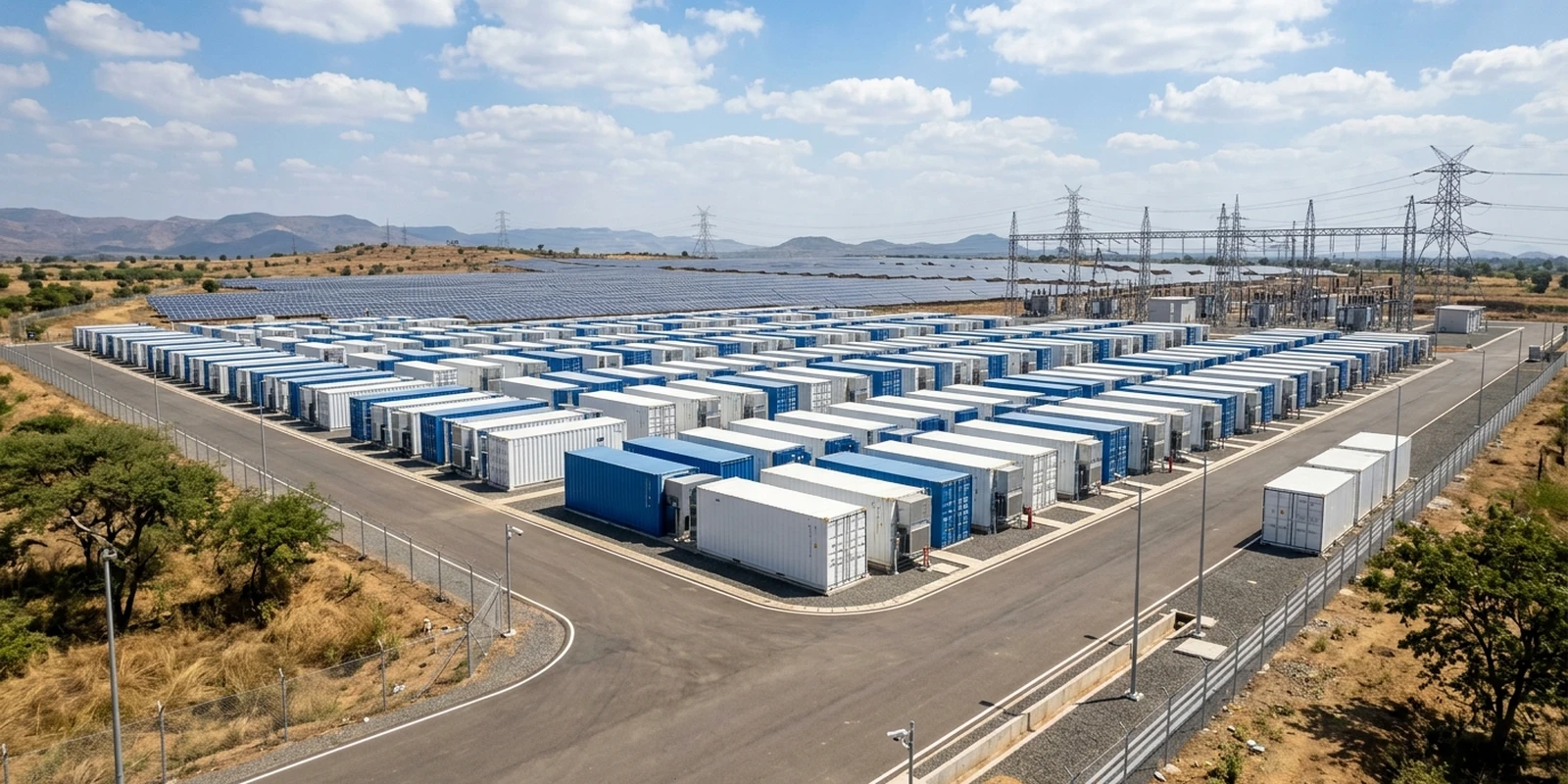
India’s Non-Fossil Electricity Capacity Hits 54.18%
💡 India Non-Fossil Electricity Capacity 2035 Target: Key Highlights
- Non-fossil sources now supply 54.18% of India’s installed power capacity as of 30 June 2026 — up from the 50% mark crossed in June 2025, five years ahead of the original 2030 NDC deadline.
- India’s GDP emissions intensity has fallen 37.38% since 2005 (2022 data), against a 45%-by-2030 goal.
- An additional carbon sink of 2.44 billion tonnes of CO₂-equivalent has been created since 2005 — short of the 2.5–3.0 billion tonne 2030 goal.
- The government has now enhanced its 2035 NDC targets: 60% non-fossil capacity, a 47% emissions-intensity cut, and a 3.5–4.0 billion tonne carbon sink.
- Disclosed by the Environment Ministry in a written Lok Sabha reply on 27 July 2026.
India’s non-fossil electricity capacity has just crossed 54.18% of the country’s total installed power — comfortably past the 50% mark it wasn’t contracted to hit until 2030, and now measured against a freshly-raised 2035 target of 60%. The number comes from a written reply the Ministry of Environment, Forest and Climate Change gave in the Lok Sabha on 27 July 2026, and it’s really two stories in one: India beating a climate goal years early, and the government responding by raising the goal rather than resting on it.
What Is India’s NDC — And What Does It Promise?
An NDC — Nationally Determined Contribution — is a country’s formal climate pledge under the Paris Agreement: a document filed with the United Nations spelling out exactly how much a country will cut emissions and build clean capacity by a set date, and how it will prove it’s on track. India’s NDC rests on three quantitative promises: cut the emissions intensity of its GDP (how much carbon it takes to produce a rupee of output), raise the non-fossil share of its installed electric power capacity, and grow an additional “carbon sink” — forest and tree cover that soaks up CO₂ — beyond what already exists.
Progress against all three is filed at home and abroad. India reports it to the UN through Biennial Transparency Reports and National Communications, under the Paris Agreement’s Enhanced Transparency Framework — the same accountability system every signatory country uses, which is what makes this week’s numbers more than a domestic press release.
Non-Fossil Power Capacity Crosses 54%, Five Years Early
The headline figure: as of 30 June 2026, non-fossil fuel-based sources — solar, wind, hydro, bio power, and nuclear combined — account for 54.18% of India’s total installed electric power capacity. That’s not a one-off spike. The share first crossed the 50% line in June 2025, which meant India hit its original NDC goal for 2030 a full five years before the deadline it had committed to.
This tracks with the broader capacity build-out Yellow Haze covered last week — India’s renewable capacity alone has nearly quadrupled since 2014, backed by tens of billions of dollars in foreign direct investment. That piece measured raw gigawatts added; this one measures something narrower and arguably more important — the share of the whole grid that no longer depends on fossil fuel, which is the actual metric India promised the world it would move.
Emissions Intensity And India’s Carbon Sink Target
The other two NDC legs are more mixed. India’s emissions intensity of GDP — emissions per unit of economic output — fell 37.38% between 2005 and 2022, against a 45%-by-2030 goal. That’s solid progress, but the gap suggests the intensity target, unlike the capacity one, isn’t on track to be beaten early; it’s a harder number to move because it’s tied to the entire economy’s carbon efficiency, not just the power sector.
The carbon sink target tells a similar story. India created an additional carbon sink of 2.44 billion tonnes of CO₂-equivalent through forest and tree cover between 2005 and 2022, against a 2030 goal of 2.5–3.0 billion tonnes. Close, but not yet there — a reminder that forestry-based carbon absorption moves on a slower, more land-constrained clock than adding solar panels or wind turbines to the grid.
The New 2035 Target: 60% Non-Fossil Electricity Capacity
Here’s the real news buried in a written parliamentary reply: having beaten its 2030 non-fossil capacity goal five years ahead of schedule, the government has raised the bar rather than declared victory. India’s enhanced 2035 NDC targets, approved by the Union Cabinet earlier this year and now being reported to Parliament, call for:
- A 47% cut in GDP emissions intensity from the 2005 baseline (up from 45% by 2030)
- 60% cumulative non-fossil electricity capacity (up from the 50% goal it already beat)
- A carbon sink of 3.5–4.0 billion tonnes of CO₂-equivalent (up from 2.5–3.0 billion tonnes)
All three are framed around the government’s “Viksit Bharat @2047” vision, with five additional qualitative commitments — on sustainable lifestyles, climate-resilient development, and adaptation capacity — rounding out the pledge. With non-fossil capacity already at 54.18% and climbing, the harder-fought battle on the intensity and carbon-sink numbers is what will decide whether the raised 2035 bar gets cleared as comfortably as the last one.
The Schemes Powering India’s Climate Numbers
The Environment Ministry’s reply names the flagship programmes it’s leaning on to keep these numbers moving: the National Green Hydrogen Mission, the PM Surya Ghar: Muft Bijli Yojana rooftop-solar scheme, PM-KUSUM for farm-level solar, Production Linked Incentive support for high-efficiency solar modules and Advanced Chemistry Cell batteries, Carbon Capture Utilisation & Storage pilots, the Nuclear Energy Mission, and the country’s newly launched hydrogen-powered train.
Two of those threads already have their own story on this site. The hydrogen fuel cell train running out of Jind is a small but symbolic entry in the “future ready and low-carbon sustainable transport” line the ministry cites. And the private-sector opening under the SHANTI Act — covered in Yellow Haze’s earlier piece on nuclear energy private investment — is the mechanism meant to help the Nuclear Energy Mission scale fast enough to matter for both the 2030 and 2035 non-fossil numbers. Battery storage, cited here through the ACC PLI scheme, is the subject of its own grid-scale battery storage manufacturing tender already running.
What It Means For India’s Paris Agreement Progress
What makes this update credible rather than self-congratulatory is where it comes from: a written reply tabled in Parliament, not a press release timed for headlines, and tracked externally through the Paris Agreement’s own reporting system. That matters for anyone reading India’s energy transition from the outside — climate financiers, ESG analysts, sustainability-minded investors — because it’s third-party-verifiable evidence, not marketing.
Independent trackers broadly agree the pace is real. The World Resources Institute has noted that India’s new electricity target is “particularly notable given rising energy demand,” and some analysts think the 60%-by-2035 goal could be reached even earlier if current renewable additions keep pace — much as the 50% target was cleared five years ahead of schedule. The harder work, most agree, now shifts to industry: India’s manufacturing and heavy-industry emissions overtook the power sector as the country’s largest source in 2025, which is why the emissions-intensity leg of the NDC — not the capacity leg — is likely to be the tighter race between now and 2035.
For now, the plain reading is simple: India said it would hit 50% non-fossil capacity by 2030, got there in 2025, and has responded to its own early win by setting a tougher target rather than a comfortable one. That’s a rarer pattern among major economies than it should be.
Frequently Asked Questions
What is India’s Nationally Determined Contribution (NDC)?
India’s NDC is its formal climate action pledge under the Paris Agreement, filed with the United Nations. It sets three quantitative goals — cutting GDP emissions intensity, raising the non-fossil share of installed power capacity, and expanding carbon sinks through forest cover — plus five qualitative commitments on sustainable development and climate resilience.
What percentage of India’s electricity capacity is non-fossil in 2026?
As of 30 June 2026, non-fossil fuel-based sources — solar, wind, hydro, bio power and nuclear combined — make up 54.18% of India’s total installed electric power capacity, per a written reply in the Lok Sabha.
Did India meet its 2030 non-fossil capacity target early?
Yes. India’s NDC committed to a 50% non-fossil share of installed electric power capacity by 2030. That threshold was crossed in June 2025 — five years ahead of the committed deadline.
What are India’s new 2035 climate targets?
India’s enhanced 2035 NDC targets call for a 47% cut in GDP emissions intensity (from a 2005 baseline), 60% cumulative non-fossil electricity capacity, and a carbon sink of 3.5–4.0 billion tonnes of CO₂-equivalent — all aligned with the government’s “Viksit Bharat @2047” vision.
What is a carbon sink, and how much has India created?
A carbon sink is any natural system — chiefly forests and tree cover here — that absorbs more CO₂ than it releases. India has created an additional carbon sink of 2.44 billion tonnes of CO₂-equivalent since 2005, against a 2030 NDC goal of 2.5–3.0 billion tonnes, and a raised 2035 goal of 3.5–4.0 billion tonnes.
Source: Press Information Bureau — Ministry of Environment, Forest and Climate Change, 27 Jul 2026 (Release ID: 2289995).