22 Bidders Chase India’s 10 GWh Grid-Storage Battery Cell Factories: Who Wants To Make The Cells Behind The 92 GWh Storage Push
MHI received 22 bids for 10 GWh of grid-scale ACC battery cell manufacturing under the PLI scheme. Who bid and what it means for storage.

22 Bidders Chase India’s 10 GWh Grid-Storage Battery Cell Factories
💡 India ACC Battery Manufacturing for Grid Storage: Key Highlights
- 22 bids received for 10 GWh of ACC manufacturing capacity earmarked for grid-scale stationary storage.
- Part of the Rs 18,100 crore PLI National Programme on ACC Battery Storage, approved May 2021, targeting 50 GWh total.
- Bidders include Reliance Industries, Amara Raja, Exide, JSW Neo Energy, Vikram Solar, Waaree and 16 others.
- Technical bids opened 11 November 2026; selection via two-stage Quality and Cost Based Selection (QCBS).
- Supply-side companion to the Rs 14,500 crore VGF scheme for 92 GWh of grid-scale storage deployment.
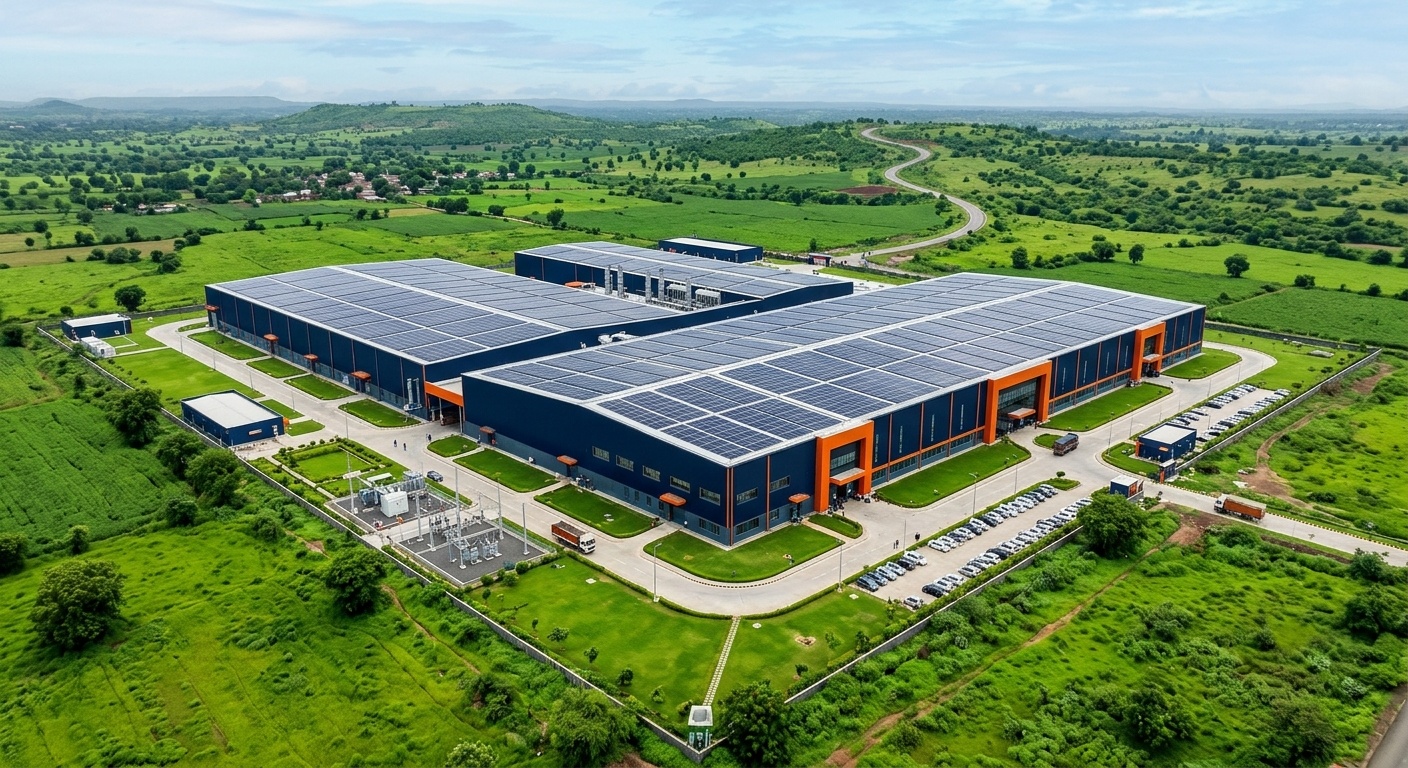
India now has 22 companies willing to build grid-scale battery cells on its own soil. On 11 November 2026, the Ministry of Heavy Industries (MHI) opened the technical bids submitted under a global tender for 10 GWh of Advanced Chemistry Cell (ACC) manufacturing capacity earmarked exclusively for grid-scale stationary storage.
The Scheme and the Tender
The tender is part of the National Programme on Advanced Chemistry Cell Battery Storage, a production-linked incentive (PLI) scheme that the Union Cabinet approved in May 2021 with a total budgetary outlay of Rs 18,100 crore. The programme targets 50 GWh of domestic ACC manufacturing capacity overall; this 10 GWh tranche is the portion reserved for cells that will go into grid-scale stationary storage systems (GSSS) rather than electric vehicles or consumer electronics.
Why 22 Bids Matter: The Demand Signal
Twenty-two bidders for 10 GWh works out to roughly 2.2 bidders per GWh of offered capacity (Derived: 22 bids divided by 10 GWh). That ratio signals genuine private-sector appetite for a segment — grid-scale storage manufacturing — that until recently had no dedicated policy runway in India.
The demand side is already moving. In November 2026, the Cabinet approved a Rs 14,500 crore viability gap funding (VGF) scheme for 92 GWh of grid-scale energy storage deployment, split across 60 GWh of pumped hydro, 30 GWh of battery energy storage systems (BESS) and 2 GWh of other technologies. That VGF scheme includes a 40 percent domestic content requirement for BESS projects. These 22 ACC manufacturing bids represent the supply-side response to that demand signal: without domestic cell factories, meeting a 40 percent domestic content mandate would require importing cells and assembling packs locally, capturing only a fraction of the value chain.
Tender Timeline
MHI floated the Request for Proposal on the Central Public Procurement (CPP) portal on 15 July 2026. A pre-bid conference followed on 29 July, giving prospective bidders a chance to seek clarifications on the tender scope and technical requirements. Bidders had until 10 November to submit their proposals, and the technical bids were opened the following day, 11 November, at the Ministry of Heavy Industries in the presence of participating bidders. The selection follows a two-stage Quality and Cost Based Selection (QCBS) process: technical evaluation first, then financial evaluation for those who qualify.
Who Bid: The Full List of 22 Companies
The 22 companies that submitted bids for India’s 10 GWh ACC battery manufacturing capacity for grid-scale storage are:
- ACME Solar Holdings
- Amara Raja Advanced Cell Technologies
- Avaada Electro
- Exide Energy Solutions
- Fujiyama Power Systems
- GK Energy
- Godawari New Energy
- JPM Energy Solutions
- JSW Neo Energy
- Lineage Power
- Mahendra Sponge and Power
- Megha Engineering and Infrastructures
- Nsure Reliable Power Solutions
- Reliance Industries
- Renew Photovoltaics
- Sai Bioenergy
- Shirdi Sai Electricals
- Sun Drops Energia
- Utex New Energy
- Vikram Solar
- Waaree Energy Storage Solutions
- Zetsol Energy
What the Bidder Mix Tells Us
The list includes companies with established battery manufacturing operations, such as Amara Raja and Exide, alongside conglomerates like Reliance Industries and JSW that have signalled large-scale energy transition investments. Solar manufacturers like Vikram Solar, Waaree and ACME are also in the field, reflecting a pattern seen across Indian clean energy: companies that built scale in solar panels are now looking at adjacent segments in the energy storage value chain. Infrastructure and engineering firms such as Megha Engineering complete the roster, suggesting that the manufacturing opportunity is attracting capital from well beyond the traditional battery sector.
The government’s stated rationale for the tender is to support the growing storage requirements arising from the expansion of renewable energy capacity and to deepen the domestic ACC value chain for energy security. India’s grid-scale storage ambitions are substantial. The Central Electricity Authority has outlined targets of 47 GW of battery storage and 27 GW of pumped storage by 2031-32, an estimated Rs 4.78 lakh crore buildout.
What Is Not Yet Known
What the PIB release does not disclose is equally important to track. The cell chemistries that bidders have proposed, the per-GWh pricing, the award timeline and the eventual allocation of the 10 GWh across winners are all unknown at this stage. The technical evaluation under the QCBS process will determine which bidders advance to the financial stage. Until awards are announced, these 22 bids represent intent to manufacture, not committed factories.
The Three-Part Policy Sequence
For the broader energy storage ecosystem, this tender is one piece of a three-part policy sequence. First, the storage deployment targets set the volume ambition. Second, the VGF scheme creates the demand pull with Rs 14,500 crore backing 92 GWh of deployed storage. Third, this PLI tender creates the supply push for 10 GWh of domestically manufactured cells to feed into that deployment pipeline. Whether the three programmes align in timing and scale will determine how much of India’s grid storage is built with Indian-made cells and how much continues to rely on imported ones. That alignment, more than any single tender result, is the metric to watch.
Frequently Asked Questions
What is the PLI ACC scheme for battery manufacturing in India?
The National Programme on Advanced Chemistry Cell (ACC) Battery Storage is a production-linked incentive scheme approved by the Union Cabinet in May 2021 with a budgetary outlay of Rs 18,100 crore. It aims to establish 50 GWh of domestic ACC manufacturing capacity in India.
How many bids were received for the 10 GWh grid-scale storage tender?
The Ministry of Heavy Industries received 22 bids from prospective companies for the 10 GWh of ACC manufacturing capacity earmarked for grid-scale stationary storage applications.
What is the connection between this tender and the 92 GWh VGF scheme?
The Rs 14,500 crore VGF scheme creates demand for 92 GWh of deployed grid-scale storage, while this PLI tender creates the supply of domestically manufactured cells to feed into that deployment. The VGF scheme also mandates 40 percent domestic content for BESS projects, making domestic cell manufacturing essential.
Which major companies bid for India’s ACC battery manufacturing capacity?
The 22 bidders include Reliance Industries, Amara Raja Advanced Cell Technologies, Exide Energy Solutions, JSW Neo Energy, Vikram Solar, Waaree Energy Storage Solutions, ACME Solar Holdings, Megha Engineering and Infrastructures, and 14 other companies spanning battery, solar, infrastructure and industrial manufacturing sectors.
When will the winners of the 10 GWh ACC tender be announced?
The award timeline has not been disclosed. Technical bids were opened on 11 November 2026 and the selection follows a two-stage Quality and Cost Based Selection (QCBS) process. Financial bids will be evaluated only for technically qualified bidders.
Researched and drafted with AI assistance; facts checked against the sources linked above and reviewed by the Yellow Haze team.
Source: MHI receives 22 bids for 10 GWh ACC manufacturing capacity under PLI ACC Scheme — Ministry of Heavy Industries (PIB), 12 November 2026 (PRID 2335459).