

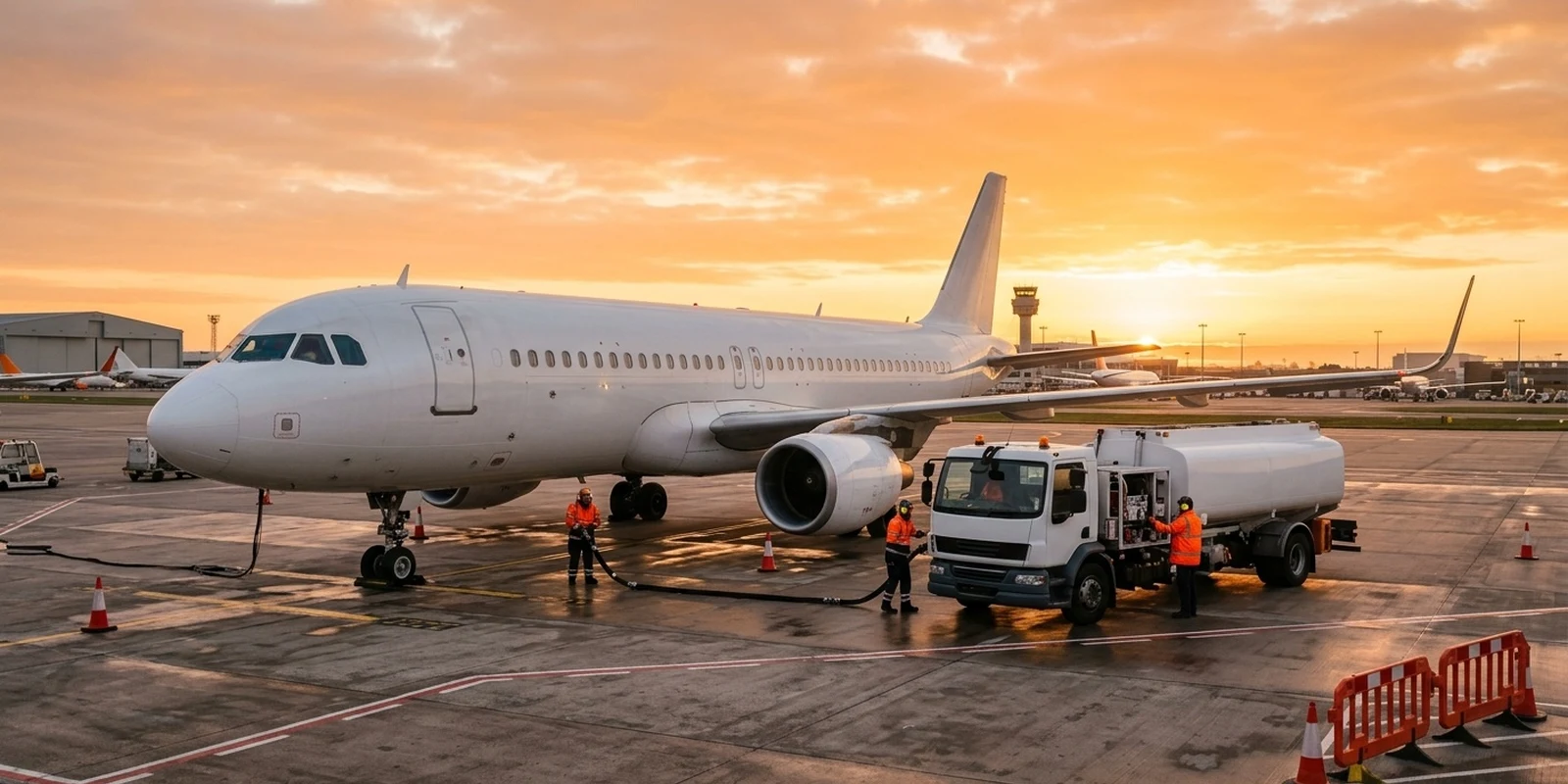
India’s Airlines Prepare For A 2027 Sustainable Aviation Fuel Mandate Under CORSIA
💡 Sustainable Aviation Fuel India CORSIA: Key Highlights
- CORSIA’s mandatory phase begins 1 January 2027 — Indian airlines must be compliant by then.
- India’s draft target: 1% SAF blending in 2027, rising to 2% by 2028 and 5% by 2030 on international flights.
- Minister Ram Mohan Naidu reviewed readiness on 30 July 2026 with the petroleum, environment and aviation ministries, DGCA, oil companies and airlines.
- Projected SAF demand: ~62,000 tonnes in 2027, growing to ~380,000 tonnes by 2030.
- IOC’s Panipat refinery and BPCL’s Mumbai unit both target SAF production from used cooking oil by late 2026.
From January 2027, every international flight to or from India enters a carbon-accounting regime it can no longer sit out. That is when the sustainable aviation fuel India CORSIA story turns from policy talk into a legal obligation. On 30 July 2026, Civil Aviation Minister Ram Mohan Naidu convened a high-level review of exactly how ready the country is — bringing the petroleum, environment and aviation ministries together with regulators, oil companies and airlines to take stock of India’s Sustainable Aviation Fuel (SAF) roadmap and its compliance plan under CORSIA, the aviation industry’s global carbon scheme.
Sustainable Aviation Fuel, India And CORSIA: The Basics
Sustainable Aviation Fuel is jet fuel made from non-petroleum feedstock — used cooking oil, agricultural residue, or other biomass — refined so it blends directly into regular jet fuel and burns in existing aircraft with no engine changes needed. It doesn’t eliminate a flight’s emissions, but because its feedstock already absorbed carbon while growing or being used, it cuts the fuel’s net carbon footprint versus fossil jet fuel.
CORSIA — the Carbon Offsetting and Reduction Scheme for International Aviation — is what turns SAF adoption into a compliance matter rather than a goodwill gesture. Set up by the International Civil Aviation Organization (ICAO), a UN specialised agency, it requires airlines on international routes to cap net emissions growth using SAF or carbon offsets. Two voluntary phases have run since 2021; from 1 January 2027, it turns mandatory for nearly every ICAO member state, India included.
India’s 2027 Compliance Clock
With under 18 months left before the mandatory CORSIA phase begins, the 30 July meeting pulled in the Secretary (Civil Aviation), officials from Petroleum & Natural Gas and Environment, Forest & Climate Change, the DGCA, Airports Authority of India, Bureau of Indian Standards, Bureau of Energy Efficiency, oil marketing companies, airlines and airport operators — nearly every stakeholder that touches jet fuel, from refinery to wingtip.
What’s On The Table
India’s draft roadmap sets an indicative blending target of 1% in 2027, stepping up to 2% in 2028 and 5% by 2030, starting with international flights before any move to expand it domestically. The government’s stated priority is meeting the first-year 1% requirement “in the most cost-effective manner” — a sign passenger fare impact is a live concern. Naidu told stakeholders the draft SAF policy is in its final stages, adding: “we need to ensure the least possible burden on passengers.” The meeting also reviewed production and certification progress, commissioning timelines with the oil marketing companies building the plants, and the accounting/monitoring framework India needs to align with ICAO’s rules. “We must now move from feasibility studies to concrete production timelines and from ambition to action,” Naidu said.
Building The Supply Chain
A blending mandate is only as real as the fuel behind it, and India’s SAF supply chain is still mostly under construction — though not starting from zero: 104 airports nationwide have already moved to 100% green energy for ground operations since 2014.
Refineries And Farmers
Indian Oil’s Panipat refinery is targeting SAF production from used cooking oil by September 2026, and Bharat Petroleum is commissioning a co-processing unit at its Mumbai refinery by end-2026 — both racing to have fuel ready before the 2027 blending clock starts. India’s SAF demand is estimated at roughly 62,000 tonnes in 2027, climbing to about 130,000 tonnes in 2028 and ~380,000 tonnes by 2030. Alongside production, a national SAF Registry for end-to-end traceability and an ICAO-aligned monitoring framework are being built to back India’s compliance with verifiable data. Naidu has repeatedly called SAF “a strategic national opportunity” rather than just a compliance box — used cooking oil is the near-term feedstock, but agricultural residue is on the roadmap too, echoing how India’s ethanol-blending programme has already routed over a lakh crore rupees to farmers (see our breakdown of the E20 ethanol blending programme).
What It Means
India is now running parallel biofuel mandates across two very different modes of transport — ethanol for road vehicles, and from January 2027, SAF for aviation. E20 took two decades to reach a 20% blend on an already-mature ethanol supply chain; SAF has a fraction of that runway before its far smaller 1% target turns mandatory, which is exactly why production capacity, a traceability registry and a monitoring framework all need to exist before compliance becomes legally binding, not after. India has already shown with the hydrogen-powered bus and truck pilots under the National Green Hydrogen Mission that it’s willing to test more than one alternative-fuel pathway for transport at once. Aviation has no battery-electric shortcut at commercial scale, though — for long-haul flying, SAF and carbon offsets are effectively the only levers available, which is why CORSIA compliance is now a fixed date on India’s civil aviation calendar rather than a distant target.
Frequently Asked Questions
What is Sustainable Aviation Fuel (SAF)?
SAF is jet fuel made from non-petroleum sources like used cooking oil or agricultural residue. It blends with conventional jet fuel and works in existing aircraft engines, cutting a flight’s net carbon footprint.
What is CORSIA and why does it affect Indian airlines?
CORSIA is ICAO’s global scheme requiring international airlines to cap emissions growth using SAF or carbon offsets. Its mandatory phase begins 1 January 2027 and covers nearly all ICAO member states, including India.
When does India’s SAF blending mandate start, and how much?
India’s draft roadmap proposes 1% blending in 2027, rising to 2% in 2028 and 5% by 2030, starting with international flights.
Will SAF make air tickets more expensive in India?
SAF currently costs more to produce than conventional jet fuel. The government says the final SAF policy will aim for “the least possible burden on passengers,” but actual fare impact will depend on production scale and any subsidy support.
Source: Ministry of Civil Aviation review of SAF and CORSIA preparedness — Press Information Bureau, Government of India, 30 Jul 2026 (PRID 2291473); CORSIA framework detail per ICAO.